
Northern Spain – a journey beyond the known Spain
Northern Spain is one of the most interesting and still underappreciated parts of the country. Here, Spain has a different face – greener, calmer, more Atlantic and steeped in history. Instead of endless beaches and large resorts, you will find medieval towns, ancient Roman monuments, mountains, fishing villages, ocean shores and one of the most famous pilgrimage traditions in the world – Camino de Santiago.
That is precisely the reason. Journey Group to create the journey „"Northern Spain"“ – An 8-day itinerary through Galicia, Asturias and Cantabria, which brings together culture, nature, history, gastronomy and the authentic atmosphere of the northern Spanish coast. The itinerary includes Santander, Santiago de Compostela, Vigo, Combarro, Cambados, A Coruña, Lugo, Oviedo, Covadonga, Santillana del Mar, Altamira and León.
Why choose Northern Spain?
When we talk about Spain, the first places that usually come to our minds are Barcelona, Madrid, Valencia, Mallorca or Andalusia.
But to the north lies a completely different Spain.
There, the Atlantic Ocean shapes the landscape, the green hills reach almost to the coast, and the small towns preserve traditions that have been passed down for generations.
Galicia impresses with its ocean, seafood cuisine and the Camino de Santiago.
Asturias is a land of green mountains, historic cities and dramatic natural landscapes.
Cantabria combines beautiful coastal towns, medieval villages and one of the most interesting prehistoric heritages in Europe.
And all of this can be discovered within one trip.
Santiago de Compostela – where the Road ends
There is hardly a more suitable place from which to start exploring Northern Spain than Santiago de Compostela.
The city is the end point of the famous Camino de Santiago – a pilgrimage route along which people from all over Europe and the world have traveled for centuries.
But even if you are not a pilgrim and have never thought of walking the Camino on foot, Santiago de Compostela is worth a visit.
The old town is a true architectural treasure.
Cobblestone streets lead to majestic squares, stone buildings, churches and small restaurants where you can try traditional Galician cuisine.
In the center stands the impressive Cathedral of Santiago de Compostela – the place where millions of pilgrims head.
And when evening falls, the city takes on a completely different atmosphere.
The stone facades are illuminated, the squares fill with people, and the restaurants offer local specialties and Galician wines.
This is the moment you understand why Santiago is much more than a tourist attraction.
Galicia – Spain with a taste of the Atlantic Ocean
One of the strongest sides of Northern Spain is its cuisine.
Galicia is known for its abundance of seafood – fresh fish, mussels, shrimp, crabs and, of course, the famous pulpo a la galega – traditional Galician octopus.
But the region's gastronomy does not end with seafood.
Here you will find cheeses, meat specialties, local desserts and wines, among which the most popular is Albariño.
It is the wine tradition that is one of the reasons to visit Cambados.
The city is located in the heart of the region famous for the production of Albariño, and is a great place to experience the connection between Galician cuisine, the ocean and local winemaking.

Vigo – the city that lives with the ocean
After Santiago, the route takes us to Vigo – one of the major cities of Galicia and an important port on the Atlantic Ocean.
Vigo is different from the classic Spanish tourist cities.
Here, life is connected to the sea.
The harbor, fishing traditions, seafood cuisine, and ocean views are part of everyday life.
The city is also a starting point for the famous Cies Islands, known for its beautiful beaches and natural landscapes.
This is one of those stops that shows why Northern Spain is so different from the south of the country.
Combarro – the small fishing village you will remember
Sometimes it's the small places that leave the strongest memories.
That's how it is. Combaro.
This traditional Galician village is known for its stone houses, narrow streets and characteristic chorreos – small stone or wooden buildings traditionally used for storing grain.
A walk here is like stepping back in time.
There are no huge boulevards or modern skyscrapers.
There is stone, sea, boats, traditional architecture and tranquility.
It is places like these that make a trip different.


La Coruña and the ancient lighthouse of Hercules
Northern Spain is a place where history and the ocean constantly meet.
One of the best examples is La Coruna.
The city is located on a peninsula jutting into the Atlantic Ocean, and its most recognizable symbol is Torre de Hercules.
This is an ancient Roman lighthouse that still towers over the coast today.
Imagine the place almost two millennia ago – ships approaching the shore, the light of the lighthouse and the vast Atlantic Ocean before them.
Today, the area around the lighthouse is a great place for walking and taking photos.
Lugo – when Roman history is still before your eyes
If you love history, Lugo will be one of the most impressive stops on the route.
The city is famous for its Roman fortress walls – some of the best preserved such structures in Europe.
Walking along the walls gives you the opportunity to look at the historic center from above and feel the scale of the ancient city.
This is another example of why Northern Spain is so interesting for lovers of cultural tourism.
Here, history is not confined to a museum.
It is part of the city itself.
Oviedo – the green heart of Asturias
After Galicia, the route continues to Asturias.
Here the landscape gradually changes.
The green mountains, valleys, and the wetter Atlantic climate create the feeling that we have entered another country.
The capital of the region is Oviedo.
The city combines history, architecture and a relaxed atmosphere.
And for food lovers, Asturias is a separate adventure.
The local cuisine is famous for dishes such as fabada asturiana, cachopo and the characteristic local cheeses.
Here, nutrition is not just a necessity.
It is part of the culture.
Covadonga – mountains, history and spirituality
One of the most impressive natural parts of the trip is Covadonga.
The region is located among the mountains of Picos de Europa and combines impressive nature with immense historical and religious significance for Spain.
The famous sanctuary of Covadonga is located here, and the surrounding mountains offer views that seem almost unreal.
This is the moment in the journey when urban architecture is left behind and nature comes to the fore.
Santillana del Mar – medieval Spain
Imagine a city without modern facades, with narrow cobblestone streets and stone houses that have preserved their medieval appearance.
This is Santillana del Mar.
The town is among the most beautiful historic places in Cantabria and is a wonderful example of the region's traditional architecture.
A walk here is not just sightseeing.
It is an experience.
Altamira – meeting people from thousands of years ago
One of the most unusual visits along the route is Altamira.
The cave is famous for its prehistoric drawings, created thousands of years ago.
These images are among the most important evidence of early human art.
Visiting the museum and the replica of the cave allows us to peek into a world that existed long before the emergence of modern civilizations.
This is one of the moments that reminds us how long human history is.
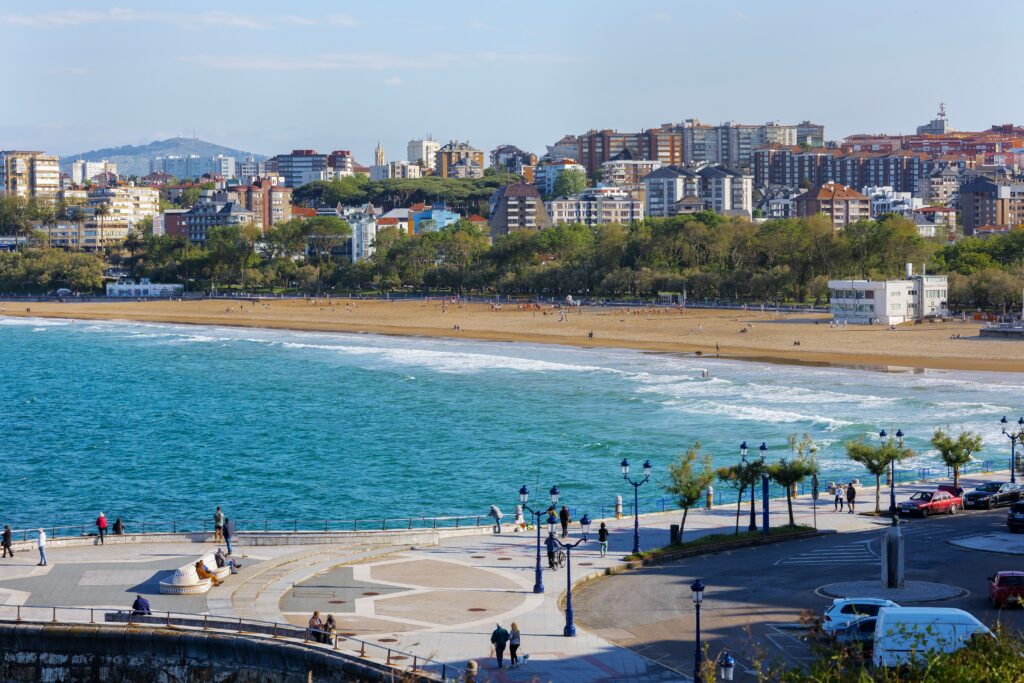
Santander – final by the Bay of Biscay
The last big stop is Santander.
The city is located around a beautiful bay and combines a maritime atmosphere, elegant architecture, beaches and green parks.
Here the journey gradually calms down.
After days filled with cities, mountains, history and the ocean, Santander is a great place for a final stroll.
And right here you'll probably realize how much you've seen in just eight days.
Leon – last encounter with history
Before the journey ends, the route takes us to Leon.
The city has enormous importance for the history of Northern Spain and for the Camino de Santiago.
One of its architectural symbols is the majestic Leon Cathedral, known for its impressive stained glass windows.
We will see and Casa Botines – one of the buildings designed by Antonio Gaudi outside Catalonia.
Leon is the fitting finale to a journey in which architecture and history are a constant presence.

What makes this trip different?
This trip to Northern Spain is not just a tour of a few cities.
It brings together in one place:
🌊 Atlantic Ocean
⛪ Camino de Santiago
🏰 medieval cities
🏛️ Roman heritage
⛰️ the mountains of Asturias
🍷 Galician wines
🦐 seafood
🎨 the prehistoric heritage of Altamira
🌿 the green landscapes of Northern Spain
And most importantly – the opportunity to see a Spain that often remains off the standard tourist routes.
When is the best time to visit Northern Spain?
Northern Spain is a wonderful destination for people who prefer cultural and combined trips, and not just a beach holiday.
The Atlantic climate means that the weather can be more changeable compared to the south of Spain.
However, this is also one of the reasons why the region is so green.
If you love walking, history, architecture, local cuisine, nature and authentic cities, Northern Spain is a great choice.